
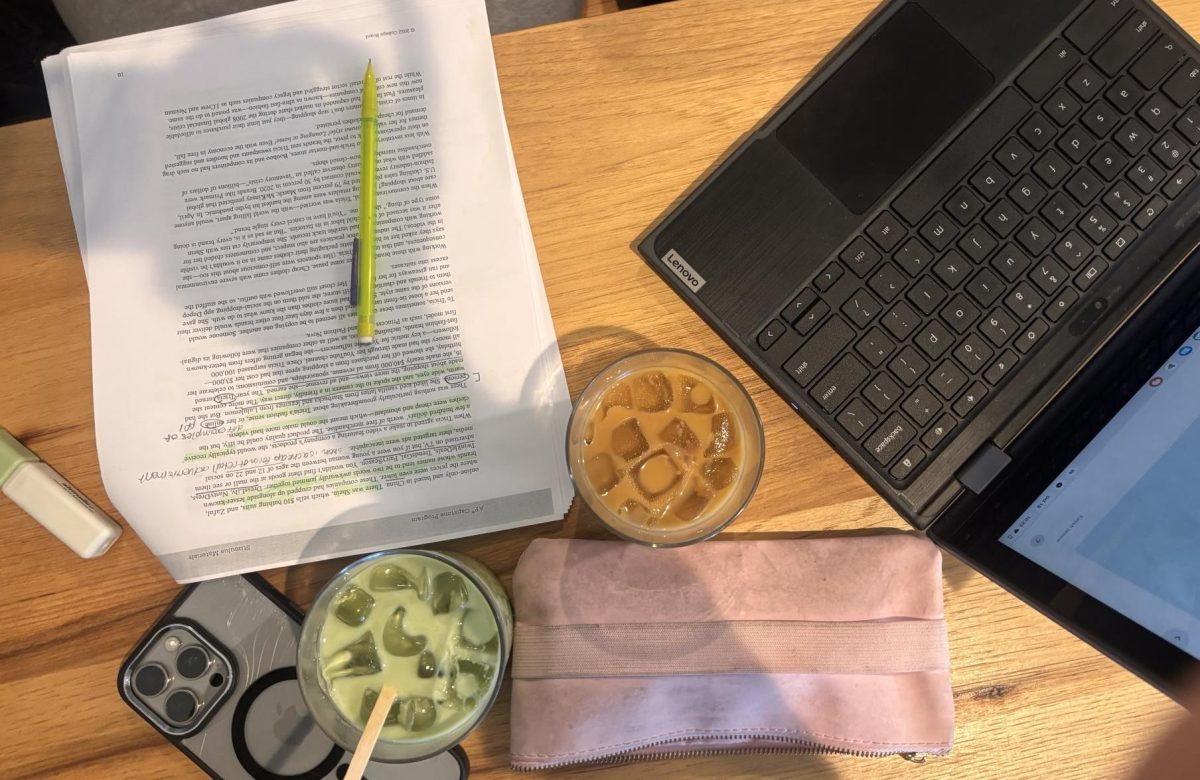
It’s a Monday night, and you just got home from school. The 3,000-word paper assigned to you two weeks ago is due at 11:59 pm. Have you gotten plenty of time to work on it and prepare appropriately? Yes. Have you decided to prioritize your social life instead? Yes. You convince yourself that your social life is important, so you don’t feel guilty and ruin your mood. So, you come to the only conclusion left: an all-nighter. The time is 5 pm. You’ve only created the outline. No writing yet, just an outline. You feel stressed, so you take a shower and eat dinner to regroup. It’s now 7 pm. The intro is complete. You think, “Should I have done this sooner?” You complete the paper at 2 am and get 4 hours of sleep. Monday is terrible, but you get a B on the paper. Yes, it’s a passing grade, but you think to yourself, “Could I have gotten an A?” The answer to this student is “yes.” In fact, this student could have gotten an A on their paper, as well as spent time with their friends. The only thing they had to do was not procrastinate and have better time management skills.
What are bad study habits?
Common ineffective study habits include cramming, poor time management, all-nighters, rereading notes, and excessive phone procrastination. It’s common for students to experience burnout when studying, but they don’t realize that there are easier ways to study without causing stress.
Studies show that the use of cell phones during studying disrupts concentration. Addictive elements of cell phones, such as notifications or social media distracts students. Although many students believe they can successfully “multitask”, neuropsychologists suggest that the availability of technology during academic performances reduces overall productivity. (Child Mind Institute).
“I always get distracted texting my friends or watching social media during my homework,” Halle McNeil (‘27) said.
Ineffective study habits are popularized and portrayed as normalized on social media platforms. With the regular and consistent consumption of social media among teens, they may come across videos that normalize cramming for an exam the next day. These unrealistic standards portrayed on social media set the stage for how students want to study, leading them to believe it’s effective.
Rereading vs. active recall
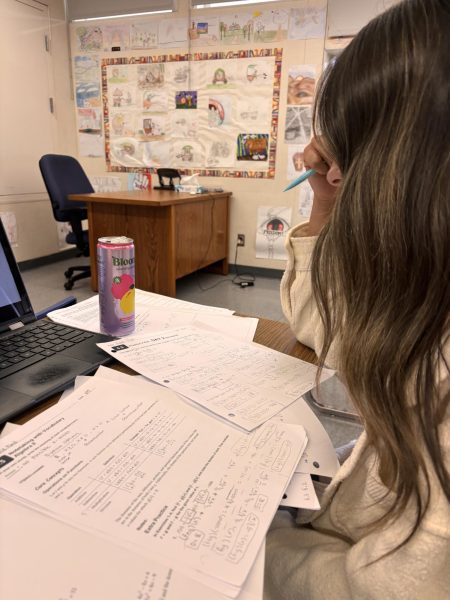
Many students believe rereading their notes is a successful way to memorize information for exams. Although repeatedly rereading notes may seem productive, studies prove otherwise. Rereading notes essentially doesn’t lead to long-term memorization, which is needed for tests or quizzes. Instead, active recall is a more effective study habit that enhances students’ productivity as well as their academic performance without stress. Flashcards are an example of active recall.
“[Flashcards] were found to be popular and correlated with higher GPA and test scores,”(National Library of Medicine).
Flashcards aren’t the only option-practice tests/questions, summarization, blurting, and teaching a topic to a friend are also just as effective.
“I try to write down all I can remember on a whiteboard to help me remember information. I think it helps because I’m more engaged,” Alondra Sanchez (‘27) said.
Time Management Skills
Time management is arguably the most important study habit in order to combat stress. Being organized on certain deadlines, test days, and making a plan for study time is crucial to academic success. That being said, consistently pulling all-nighters before exams is not an effective use of time.
Importance of Sleep
Sleep is a crucial part of maintaining good study habits because without it, it’s difficult to function. For many teens, getting enough sleep is an issue, and it’s expressed in academic performance. Numerous studiesshow that sleep helps the body and brain function better. The Centers for Disease Control and Prevention emphasizes that teens’ lacking sleep can’t concentrate and find it more difficult to retain information (Bureau of Indian Education).
Taking Breaks
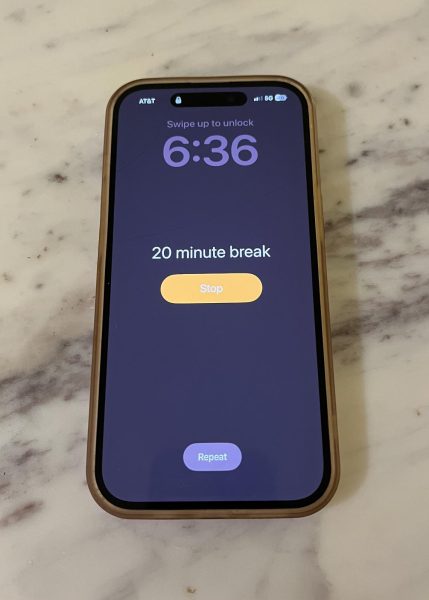
One key component that can be integrated into efficient study habits is short breaks. Surprisingly, over-studyingis possible and not effective without necessary brain breaks that help students’ brains retain more information. The prefrontal cortex of the brain is responsible for focus, but can’t be overworked without recharging (The University of North Carolina at Chapel Hill). Breaks don’t mean scrolling through social media for an hour. Brain breaks are meant to be short and don’t overload the prefrontal cortex with unnecessary information. Instead, breaks can consist of exercise, nourishing the body with food, or socializing (The University of North Carolina at Chapel Hill).
Conclusion
It’s very possible that students won’t experience stress while studying if they integrate healthy study habits. Instead of resulting in an all-nighter or cramming for an exam at the last minute, students can prioritize their time thoughtfully. Rather than starting a paper the night before it’s due, teens can begin after it is assigned. Using active recall methods as well as integrating short breaks will make their study time more efficient. Getting proper sleep as well as having organization on important dates can reduce students’ stress significantly as well. By displaying these healthier study habits, students can improve academically as well as reduce stress that doesn’t result in last-minute cramming.