

According to samhsa.gov, approximately 5.2 million veterans experienced a behavioral health condition in 2020.
Columbia University’s Man O’ War Project, studied 63 veterans through eight weeks of equine-assisted therapy. The veterans had a 94% engagement rate; 50.7% of participants showed significant improvement of PTSD symptoms, depression scores decreased
by 47%, and the benefits persisted at a 3-month follow-up. (walkintuit.org)
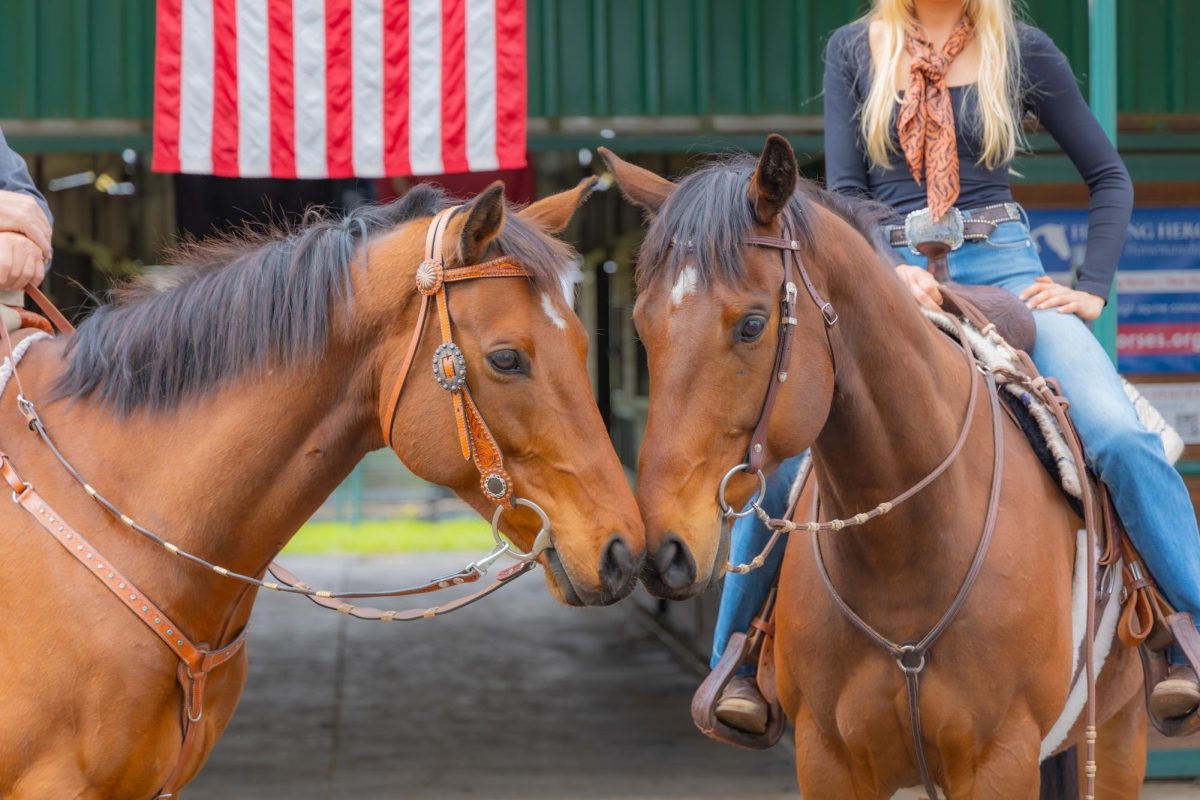
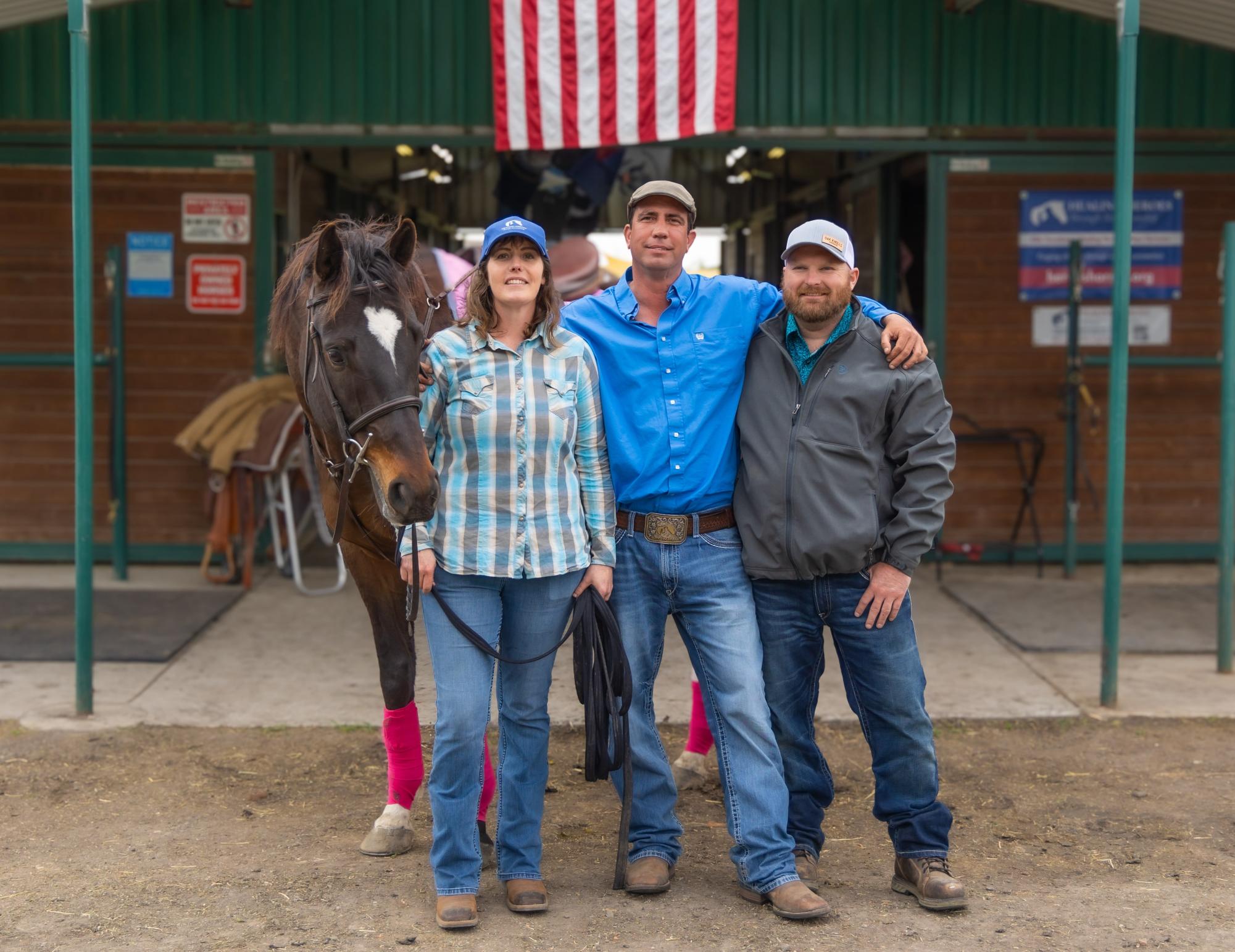
In 2023, Simon d’Unienville, Yvette d’Unienville, and Justin Trammell founded Healing Heroes Through Horsemanship, heroeshorses.org, (HHH), a nonprofit organization focused on empowering, supporting, and educating veterans through retraining off-the-track Thoroughbreds. The organization takes retired racehorses and returns them to excel in a different career, like being a show or trial horse. Veterans get to learn about training Thoroughbreds, while also healing themselves.
In the past, HHH provided equine-assisted therapy and learning programs, but later switched to teaching employable skills to set veterans up for success after they are done with the program.
“Unfortunately, a lot of veterans just struggle to reintegrate [into society], and even if it’s been a long time since their service, they’ve just not found something that they’re passionate about,” Yvette d’Unienville said. “{Our program] gives [veterans] therapeutic benefits, but it’s also giving them job skills, and for us, that is really important.”
The program is a 210-hour curriculum with rolling enrollment. The veterans go through the program at their own pace to fit their needs and learning styles.
The program aids with training veterans in skills they can use in the equestrian workforce.
“There are a lot of people on the Central Coast who are looking for skilled people to work with their horses; barn managers that are feeding, cleaning, grooming, tacking up, doing first aid, and all the general chores that come with looking after the horses,” Yvette d’Unienville said.
Training for equestrian-based career opportunities is limited.
“ The problem that we find is that people spend a lot of money on training for the horse and training for themselves, but the person who takes care of their horse, 90% of the time, they don’t have the training to do so, and horses get abused unintentionally,” Yvette d’Unienville said.
Veterans can receive training and be on the job in a relatively short period.
“[The program] can be done in 10 weeks, but [veterans] have as long as they need to go through the program; most veterans finish in 10 to 14 weeks, but we’ve had veterans take as long as 20 weeks to go through it,” Yvette d’Unienville said. ”It is part-time, either two or three days a week, so it gives more flexibility to deal with other things in [their] life, whether that is part-time work, family, or just not having the balancing chaos of trying to do something full-time.”
The veterans aren’t the only ones receiving an opportunity for success.
“One of the great parts of our program is that the horses that we use also need a second chance,” Yvette d’Unienville said.
The Central Coast is a haven for horses. The need for experienced trainers persists across SLO county.
“So, you know, we have a lot of people, especially those that can afford horses on the Central Coast, [that] are often older, and so they may have had injuries. So when they know that the person at the barn can lunge their horse, can do wraps, can blanket them, do fly spray– all the things– [those horse owners] can now have [a trained individual] as an add-on service, and that makes [the veterans] really highly sought after as employees.
The program grants veterans opportunities to better both their life and the lives of others, including the animals.
“It’s really empowering for [the veterans] to be able to work with the horses and see their success… they’re not showing up for themselves, they show up for the horses. So when we say to them, ‘hey, we’ve got these horses here, and they all need adoption, so you’re helping these horses find a new career,’ [they’re motivated.]” Yvette d’Unienville said. “[The veterans] are service orientated; they want to help others, so I think it’s a really good fit that they feel that they’re not just here for their own therapy.”
“Horses are naturally hypervigilant and sensitive to verbal and nonverbal cues, giving humans immediate feedback that helps participants adjust their behavior in response. This real-time feedback allows veterans to notice their own tension and stress levels, practice calming down in real-time, build trust without words, and experience safety in their bodies again,” according to walkintuit.org,
The parallel between off-the-track thoroughbreds and the veterans allows them to bond due to their similar experiences.