
Thousands of years ago, makeup began in Egypt. Makeup was “used to ward off evil and protect the eyes from harsh desert sun and sand,” (Professional Beauty India). During the Middle Ages in Europe, makeup was used as a symbol of wealth. Pale skin tones indicated a woman was prosperous, causing the use of powder to rise. Pale complexions were apparent in upper-class women during the Elizabethan Era, while the lower class had tan complexions from working outside, making a clear distinction of wealth. (Meraki and Co.)
However, throughout history, many discouraged makeup by making stereotypes. In the Suffragette Era, women who wore lipstick were accused of being prostitutes or even practicing witchcraft. The Women’s Social and Political Union, formed in 1903, used red lipstick “to wreak political havoc,” (Dazed Digital). Makeup has been worn and perceived differently depending on the time period and what events were apparent.
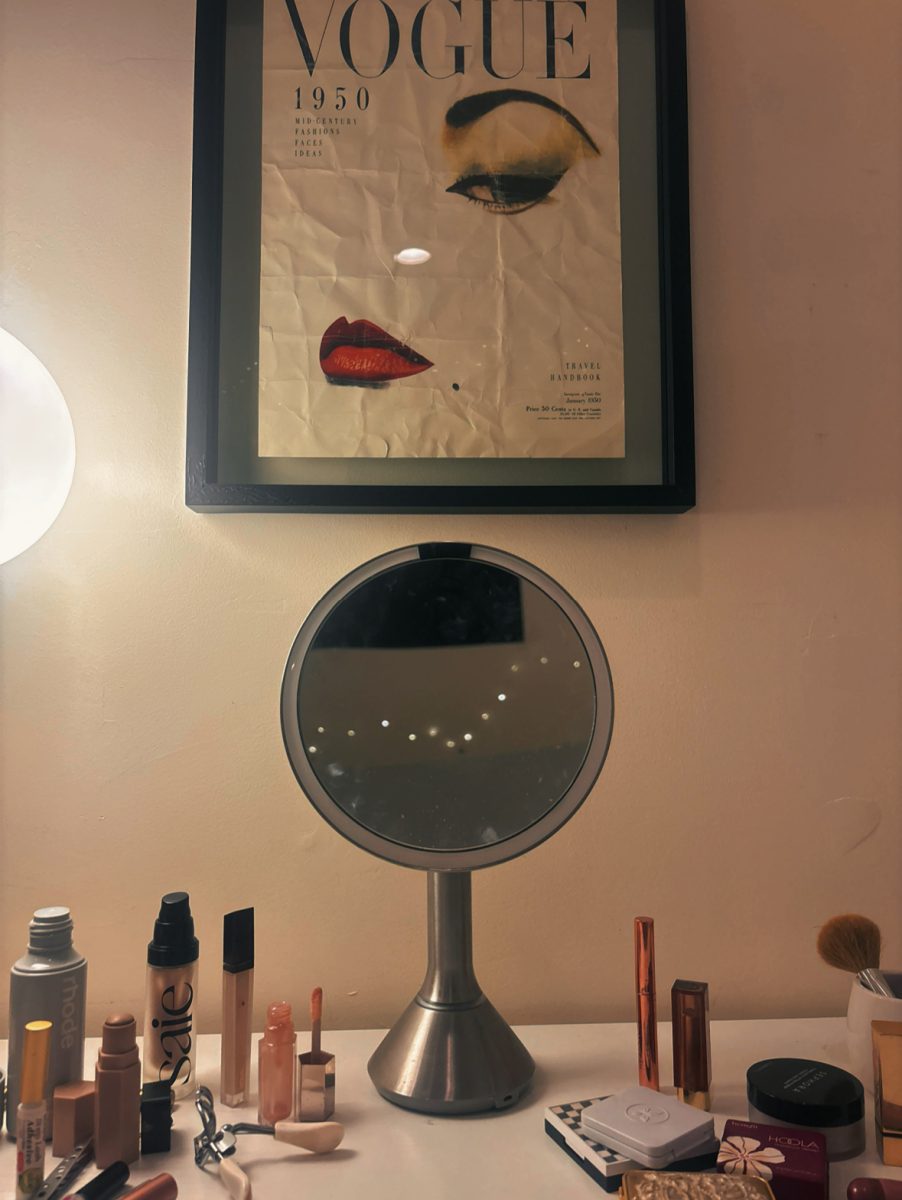
Now, many students on campus use makeup as a form of self-expression and a way to discover themselves with their role in society on campus. Makeup routines are a part of everyday lives for students who use makeup, and can be a personal aspect.
“I feel like everyone’s makeup is different, and in that way it expresses who each person is individually,” Roxie Ford (27’) said.
Cosmetology teacher Kyla Holthaus, teaches her students the benefits of expressing themselves through makeup, whether they are or are not familiar with makeup.
“I think [makeup] shows their uniqueness and embracing who they are. Some students go into this and don’t even wear makeup, and that’s totally fine. It’s just showing them how to embrace themselves either way,” Holthaus said.
Students can look at their past experiences or moments in their lives and it can coincide with certain makeup styles they used at that time. One may remember what kind of concealer they used in the past or the way they did their eyebrows when they were a sophomore in high school. Makeup routines or certain styles allow for reflection on maturity and growth, mentally and physically.
“My makeup has progressed; at different points of my life my makeup is different and that kind of reflects me,” Halle McNeil (27’) says.
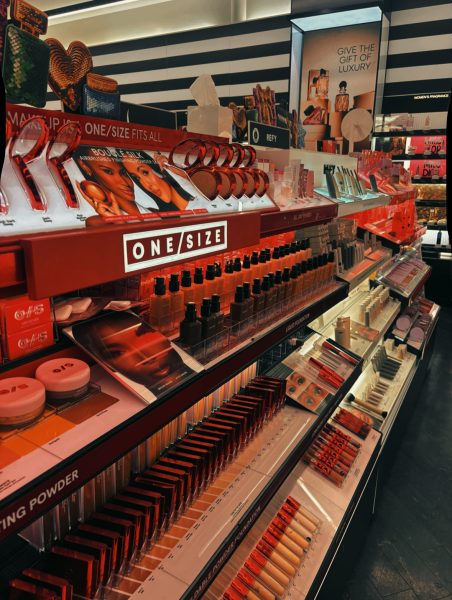
Makeup is also used to provide confidence in one’s appearance. Many students report that they feel more comfortable on the school campus with makeup on rather than no makeup at all. Makeup allows enhancement to features, such as concealer covering dark circles or lip liner tracing natural lips. Confidence is a crucial aspect of how students feel emotionally and psychologically. Wearing no makeup often corresponds with emotional effects, such as laziness or discouragement in socializing.
“I feel like on [days without makeup] I feel less confident so it makes me less motivated to work and talk to new people. I guess it just makes me feel less social,” Jesslyn Opely (27’) said.
Social media brings new uncertainties to the appearance of teenage girls from trends and algorithms that may not be realistic. Makeup permits a way for girls to combat new insecurities in a way that both expresses them and brings comfort.
“I start to feel more confident because I’m able to see the positives out of my makeup routine; how it enhances my face, and how I don’t look so tired because my eye bags are disappearing,” Opely (27’) says.
However, the rise of social media offers positive ways of influencing makeup products and trends, providing a sense of community online. Individuals are able to express themselves through online platforms, beginning movements that others try themselves. Makeup experimentation was especially prevalent during the COVID pandemic; boredom to some meant trying a new makeup trend that was popular online.
Within an abnormal and frightening time, makeup presented creativity. Big eyeliner was one of the most popular makeup trends during COVID, with 1.7M posts with “#eyeliner” stemming from the years 2020-2022 on TikTok.
“I did experiment with makeup during COVID, I did the big eyeliner makeup but I did it just for fun. I wanted to try out different things, and I think that helped me explore what I’m into as a person” Opely (27’) said.
Other popular looks, like intense highlighter on the inner corners of eyes, stemmed from common trends on social media platforms. Although individuals may look back on their past makeup looks during COVID as embarrassing or cringy, it allowed progression to their own sense of individuality.
Others’ usage of makeup originates from common social environments, such as school or contexts of growing up. Students report that, along with trends on social media, growing up with someone who uses makeup had a greater influence on their own individual usage. Family members are symbolized as role models in childhood experiences; therefore, children often imitate behaviors from their parents. These dynamics play a crucial role in shaping students’ personal growth and development (CARLA).
“I’ve always watched my mom put on makeup growing up, and I used her products when I was little,” Ford (27’) said.
Students’ peers also shape their own personal development with makeup, aligning with social conformity. However, conformity doesn’t always mean pressure, but rather connecting with others. Associations with certain makeup styles empowers new aesthetics and social groups to emerge in society. Therefore, specific makeup looks permit students to “fit in” in a certain way they want to present themselves.
“A lot of people’s motivation to wear makeup is to express who they are as a person, so if you’re someone with a certain aesthetic, you might want to do your makeup in that category because it changes how you want to present yourself,” Opely (27’) said.
How makeup is applied and its intended effect have transformed through centuries of specific expectations, beliefs, and stereotypes, however, people have always used makeup as a way to express themselves. Whether they used makeup to reflect how wealthy they were, to revolt against uncivil stereotypes, or to express creativity; all instances share the same focus: reflection of the era, creativity, and sense of self.