
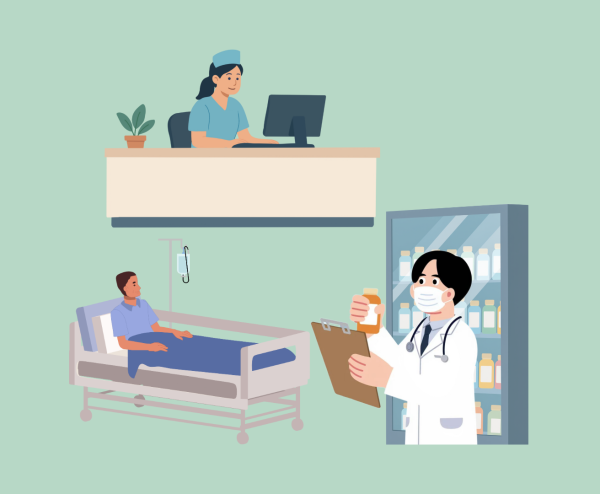
Hospitals are a complex arrangement of doing one task while managing others; medicine needs to be up to date, shelves should be stocked, rooms need to be clean, but duties can change on the fly depending on emergency situations. It can be difficult for staff members to complete all these tasks, but Dignity Health’s VolunTEEN program offered at the Arroyo Grande Community Hospital, as well as other locations, allows for teenagers ages 15-18 to assist staff and patients.
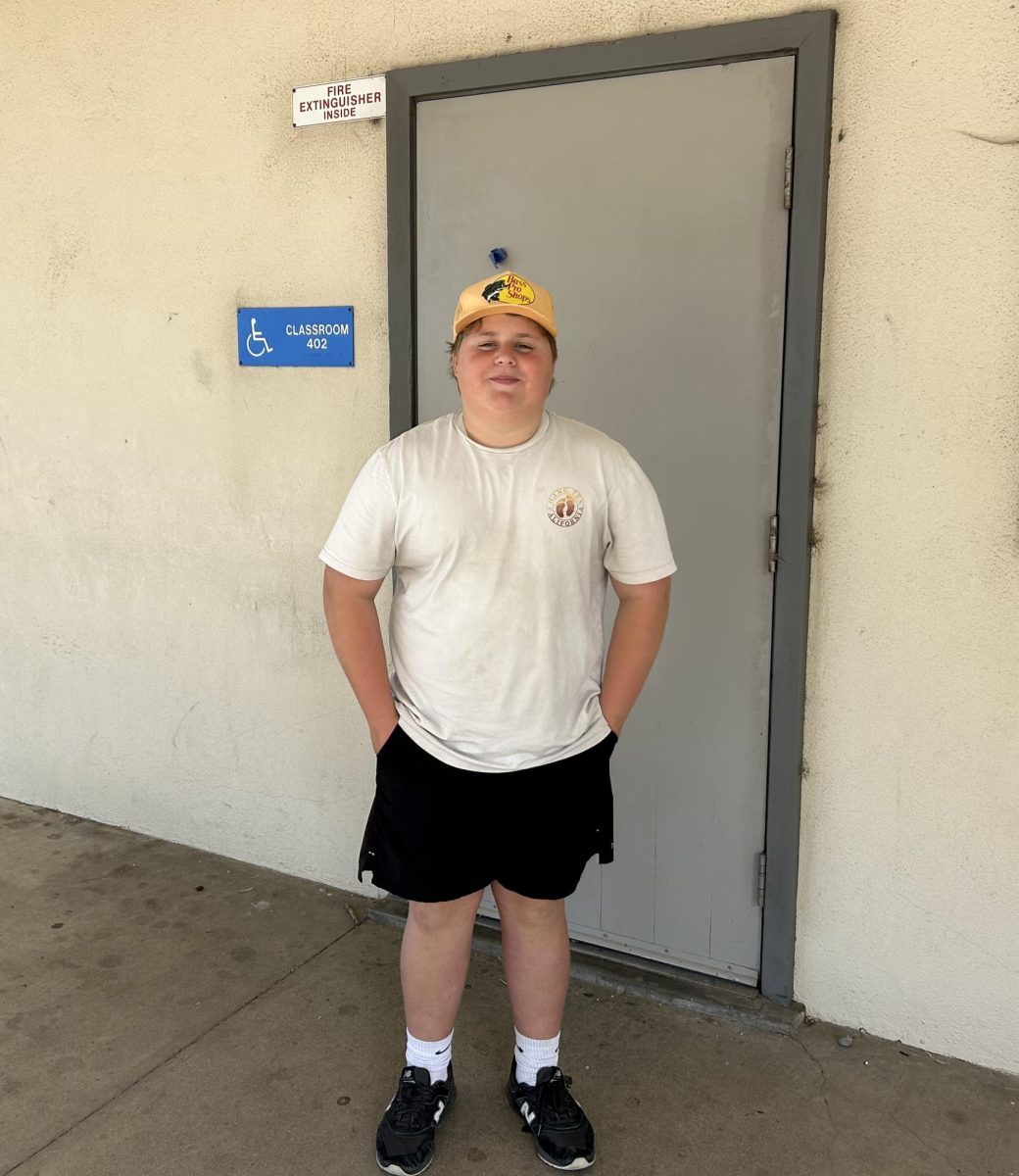
“[I do] everything no one else wants to,” VolunTEEN Student Colin Martel (‘27) said. “I’ve done delivery [of supplies], gotten supplies, cleaned up after blood, after dead bodies, and done maintenance on beds.”
To be eligible to volunteer at the Arroyo Grande Community Hospital, students must commit to the program for at least one year, work one 4-hour shift a week, and be 15 years old with a GPA of 2.75. To qualify for community service hours— 20 of which are required for AGHS graduation —students must have at least 100 hours of service before hours are signed off.
For students who plan to have a career in the medical field, having experience and volunteer work in a hospital can provide a major boost in developing relevant skills in a medical environment. The Association of American Medical Colleges spoke with admission officers who consider community service and volunteer work in both medical and non-medical fields the highest “weight” of any experience (AMA).
“The community service hours are pretty beneficial, you can either do a summer program or a year long, which is what I did,” VolunTEEN Student Emma Apodaca (‘26) said. “I ended up getting close to 200 hours.”
As teenagers, students are restricted in certain areas, such as not being able to work with patients physically. However, program organizers make up for that by putting emphasis on communication with staff and patients.
“[The VolunTEEN program has] really helped with my communication with other people,” VolunTEEN Student Charlie Klopfer (‘26) said. “[I’ve also learned] to be more aware of [what’s] happening or going on [around me].”
Students’ main takeaways from the program are communication skills, work experience in a hospital, and community service hours while helping those around them.
“I did [the program], because you get a good amount of community service, but I didn’t really need those because I already had above what was needed,” Klopfer said. “[I also participated in the program] because you can see what’s going on in the hospital without having to be a patient or [being there to] visit family.”
Although the VolunTEEN program has been available to students for quite some time, it still offers insight into the life of a hospital staff member while also providing community service hours for high schoolers. Students taking the program recommend others in Patient Care or interested in the medical field to volunteer, as it can help students further explore what type of medicine they’d like to practice.
Students interested in volunteering can visit Dignity Health to fill out their Teen Volunteer Application.