
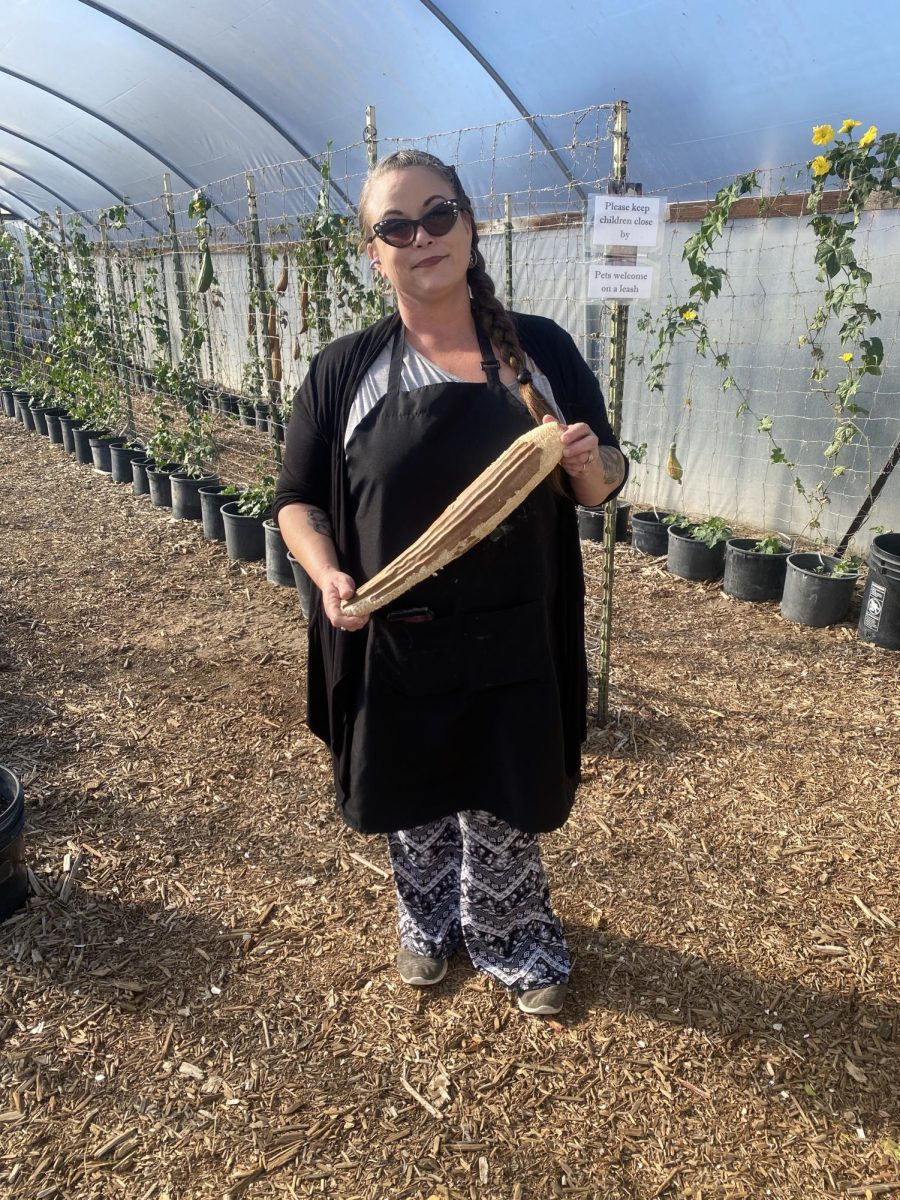
Located off of Willow Rd. in Nipomo, The Luffa Farm has grown Egyptian luffas since the mid-90s and opened to the public in 2000. Luffas are edible green gourds sometimes used for cooking, but The Luffa Farm specializes in drying out the gourds and turning them into all-natural sponges with no chemicals.
Amber, an employee who has worked at The Luffa Farm for around eight years, describes that luffa sponges can be used for anything a traditional sponge can, and they replace the non-biodegradable material most store-bought sponges are typically made with.
“You can use luffa sponges for everything,” Amber said. “I use them twice a day because they are great for keeping your skin clear, but they can [also] be used to wash dishes and even clean cars.”
Although synthetic dish sponges need to be replaced every couple of weeks, natural loofah sponges can last anywhere from 6 months to 3 years.
The Growing Process
Luffas grow on vines for six to nine months. They begin tiny and cucumber-like and elongate
over their growth period. As the gourds begin to dry out, similar to a vacuum, their slimy insides also dry, leaving only the inner fibrous structure and seeds. The outer layer is then peeled away, revealing the fibers that are cut and turned into sponges.
Specific growing techniques that The Luffa Farm has adopted over the years allow for large harvests of 12,000 to 15,000 luffas year after year.
“Pollinators, like bees, are important in the growth of luffas, which is why lavender is planted everywhere on the farm,” Amber said.
The farm keeps the luffa roots in sustainably acquired pots to prevent gophers from interfering with production.
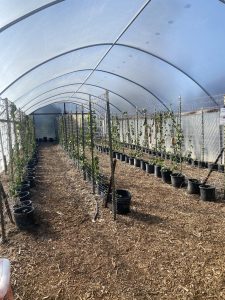
“We also grow [the luffas] in greenhouses,” Amber said. “Although the vines enjoy the heat, the primary reason we [do so] is to prevent the wind from blowing blossoms off of the vine.”
The Luffa Farm Store
The Luffa Farm’s owner, Brooklyn Gamble, said that most of the volunteers who help at the farm and store are youth who are Future Farmers of America (FFA) students completing their Supervised Agricultural Experience (SAE) Project.
“We actually had a student who won the National FFA Proficiency for Specialty Crop Production, so it was quite nice for [The Luffa Farm] to be put on a national stage,” Gamble said.
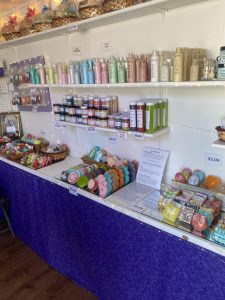
The Luffa Farm makes glycerin-based soaps in a variety of shapes and colors that contain luffa pieces. They sell their products at their farm in Nipomo, as well as on their website.