

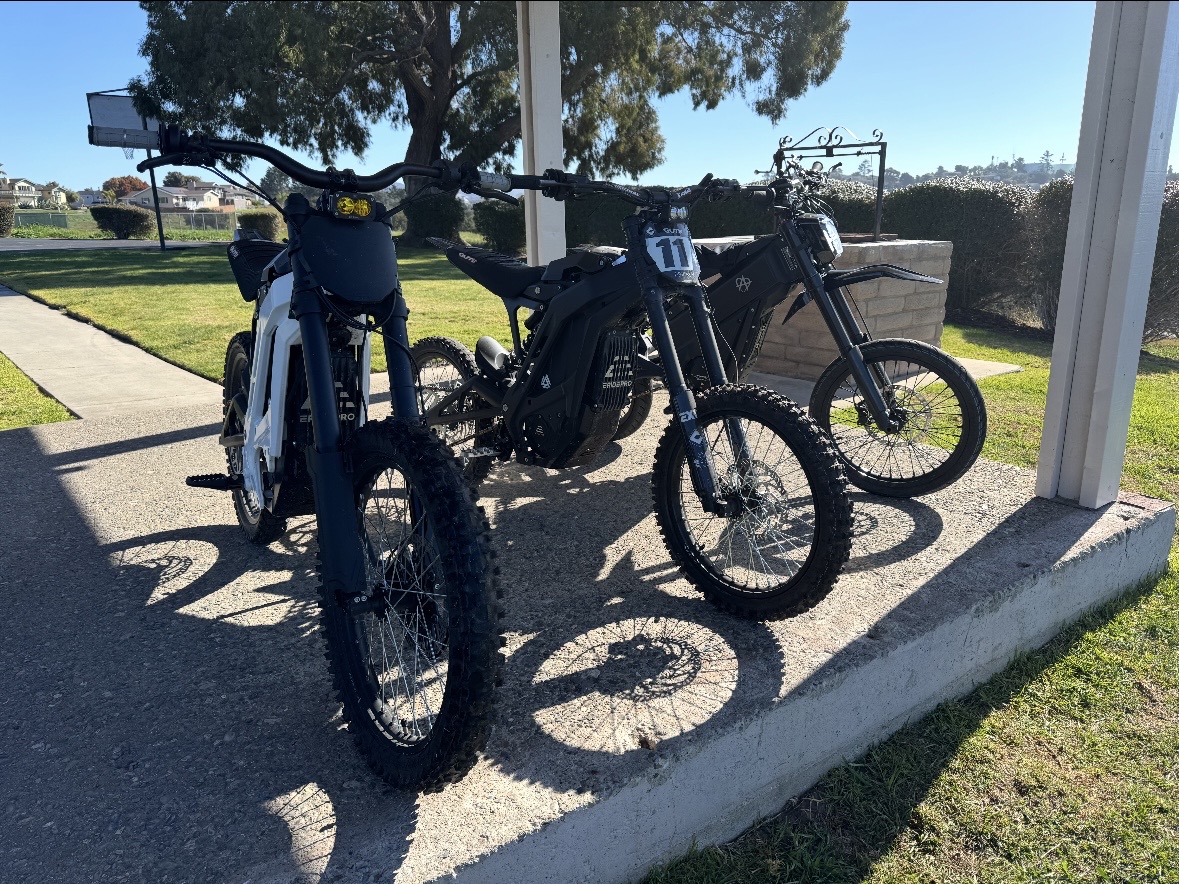
What should’ve been “an amazing day riding around town” ended with Oliver Gaston walking home without his bike.
“I felt disappointed. We were not speeding or cutting into traffic. [The Police] acted like we were criminals who ran from a crime scene,” Gaston said.
Gaston, who rides an E Ride Pro 2.0, an electric motorcycle, said his bike was impounded in Arroyo Grande near the hospital after an officer stopped him and a friend while they were riding through a crosswalk.
“I was going about 10 miles per hour the whole time. [The officer] told us they’re illegal because there are no pedals, which makes sense,” Gaston said. “We asked if we could add pedals to make it legal but he said they’re illegal.”
That one stop cost him big time.
“The impound fee was about $75, but then I got a separate ticket for about $230. Now every time I ride it, it feels like I’m risking another $300,” Gatson said.
Arroyo Grande Police Officer Brad Pullen has seen a large increase in enforcement because of community concerns.
“We get a lot of complaints at the police department about reckless e-bikes [riders]. People are constantly calling and taking videos, so there’s been a big push from the public for a crackdown,” Pullen said.
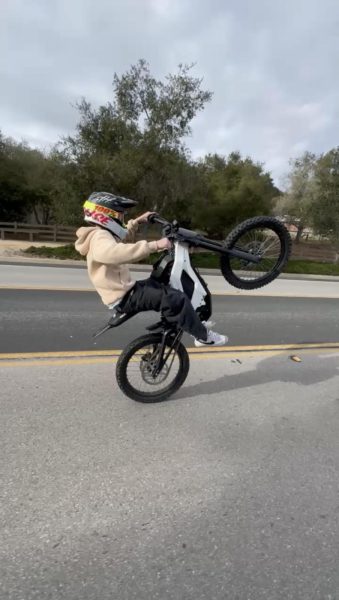
However, this isn’t the only concern for the police department.
“Some of the ways that kids are riding [are] incredibly dangerous. They’ve got two on a bike, no helmet, doing all sorts of crazy tricks,” Pullen said. “[The crackdown] is driven by public safety in combination with a lot of complaints about the riding.”
Another issue is the confusion over what is considered an e-bike.
A class 3 e-bike is street legal. It must have pedals, a motor with no more than 750 watts, and a top speed of 28 miles per hour. Under these parameters, e-bikes should not require a license.
In contrast, electric bikes like Surrons and Talarias are often called “pocket bikes” under the vehicle code. They function more like motorcycles than typical bikes.
“They’re basically motorcycles. You’d need registration, a driver’s license, a motorcycle endorsement, insurance, and they can’t really be registered for street use. They’re made for off-road or private property,” Pullen said.
If rigged correctly, the bikes can reach speeds between 45 and 75 miles per hour and have electric motors over 3,000 watts.
“They’re much more powerful and more dangerous if not operated safely,” Pullen said.
Some teens argue that this crackdown is painting all riders in the same light.
Lucas Kenny, who rides a Macfox e-bike, acknowledges that some teens are definitely aware of the legality and danger of their bikes.
“I think kids know the difference. That’s why they run when they see a cop,” Kenny said.
Still, Kenny believes that riders are not acting without thought.
“I don’t think they’re being reckless. They’re just having fun on a bike that has a bit more power. I’ve only seen wheelies happening away from cars,” Kenny said.
Kenny also argues that this enforcement might not have the desired effect.
“The whole impound situation is why people have changed how they ride. They run when they see a cop, which causes more of a disturbance than when they were just riding,” Kenny said.
Officer Pullen has also seen fleeing from officers becoming a lot more common.
“We’ve had kids run from us. All of a sudden, you’re potentially looking at criminal convictions from something you might think is minor, but could follow you for the rest of your life,” Pullen said.
Pullen has also stated that there have been multiple crashes involving these bikes.
“Sometimes the kid is at fault. Other times, the vehicle is at fault. But if they’re not wearing a helmet, they can get seriously hurt. I’ve seen some pretty bad injuries locally,” Pullen said.
Common infractions include reckless driving, doing tricks on the roadway, traveling the wrong direction on streets, and running stop signs and red lights.
“People aren’t expecting a motorcycle or fast e-bike coming the wrong way. That’s how collisions happen,” Pullen said.
For Gaston, the issue isn’t about stunts but independence.
“I bought the bike for transportation. Both my parents work and don’t always have time to drive me. I don’t have private land to ride on,” Gaston said.
Now Gaston rarely rides it.
“I spent a lot of money on it. There’s still no safe way to make our bikes legal. We don’t really have an option,” Gaton said.
Kenny suggests a pathway to make these bikes legal and thus accessible to kids. Also, allowing a way to educate to ensure proper use.
“I think there should be a way to make them legal and allow them on the road,” Kenny said.
Pullen believes families should look into what they are purchasing.
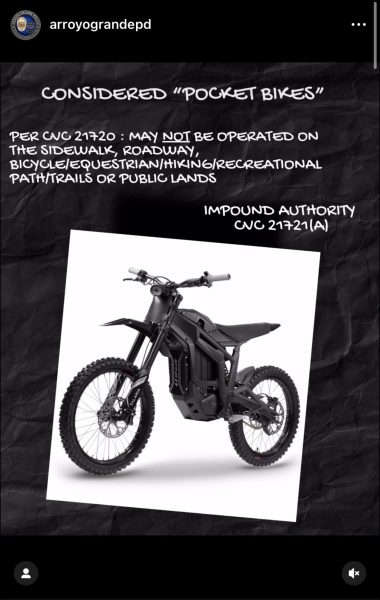
“Just make sure it’s legal, and you meet the legal requirements to ride it. Ask the seller, ask your parents, ask the police department. Make sure the bike you’re purchasing is legal for how you plan to use it,” Pullen said.
As powerful electric bikes grow more popular among teens, the conflict appears to be less about technology and more about the use cases.
Police say enforcement is about safety and responding to the complaints of the community. Some teens say it feels like they’re being treated like criminals for trying to have fun or get around town. For now, the debate continues one impound at a time.