


The weekend– Saturday and Sunday– is two free days of freedom for students set aside from the five-day school week. Weeks filled with stress from tests, quizzes, homework, Advanced Placement (AP) classes, and extracurricular activities come to a pause, or continue for some students, once the weekend begins.
Freedom is universal for highschoolers; it’s defined in many ways: studying for tests, individual hobbies, sports, traveling, time with friends, working out, family time, working, pure relaxation– the list can go on. According to students, their choices on how to spend the weekends matter in the context of the demanding high school life.
“Demanding” connotes an extreme, but high school students agree that school is demanding in multiple aspects. Attending school for seven hours a day, five days a week is challenging for some. Completing homework weekly, studying for tests and quizzes , and AP class workloads add to students’ schedules. According to a poll of 80 students, 57.5% find school demanding, 33.8% sometimes do, and only 8.8% don’t.
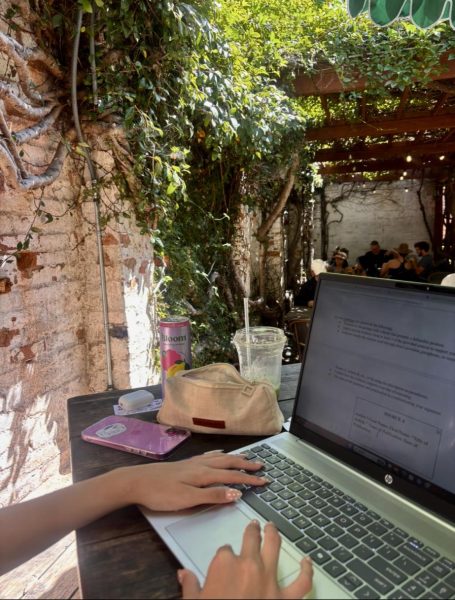
The weekend is an opportunity, deviating from the strict, five-day school week. Nobody’s freedom is identical, so students’ weekends are filled with diverse activities.
Some students spend their weekends productively, working long hours or catching up on school work. While the five-day school week is strict in terms of hours, the weekend provides 48 hours for personal priorities.
“I spend my weekends working; I normally work 14 hours on the weekend, an eight-hour shift Saturday and [a] six-hour shift Sunday. The weekends make it easier for me because I’m able to balance school-life with work-life,” AGHS Student Caleb Wildey (‘27) said.
After “demanding” school weeks, some students prioritize rejuvenation. Studies find that the practice of mindfulness helps improve motivation, focus, and lessens stress levels (Community Choice Pediatrics).
Whether students realize it or not, school is regimented with bells, lunch periods, and standardized schedules, conditioning students to be programmed to strict routines. The repetitive nature of school reinforces why weekends are a necessity.
“I find school to be very repetitive at times. School can be boring, and I feel like the day is repeating itself over and over again,” Claire Henzy (‘27) said.
School fosters social interaction, a healthy concept during adolescent psychological development. However, these interactions are limited to the classroom and 30 minute lunch periods.
Weekends, filled with countless opportunities, can be a time for prioritizing unrestricted friendships.

Identity formation is inevitable in teens and creating meaningful relationships with other people is a necessary part of self-discovery (National Library of Medicine).
A poll of 80 students from each grade level at AGHS showed that 32.5% choose to hang out with friends over the weekend.
Students believe their occupation as ‘students’ aren’t enough to define their identities. Roles like musicians, writers, athletes, or workers can provide a more authentic description of individuality. The weekends provide time for students to form identities outside of being a scholar, by engaging in individual hobbies.
“On the weekends, I love to read, go outside, and watch movies. I feel like I have more time on the weekends where I’m not focusing on school,” Emma Murray (‘27) said.
For high school students, weekends are more than two schedule-free days of the week– they’re freedom and a time to form individuality. From long work days, time spent with friends, relaxation, or hobbies, students make decisions that support their uniqueness and life away from campus.