
At most high schools, the “graduation requirement” is a hurdle to be cleared, a box to be checked so a student can walk across the stage. At AGHS that bar is set at 20 hours of community service. For the vast majority of the senior class, those 20 hours represent a few weekends of library shelving, or a handful of afternoon shifts at a local non-profit. But for a growing group of students led by Health teacher Joe Hurtado, 20 hours is just the starting line.
The “Give Back 250” club is a program designed for those who view service not as a chore, but as a calling. To earn the coveted service medal at graduation, students must complete 250 hours of volunteer work, more than twelve times the standard requirement.
While the program was originally inherited from a previous educator as a way to bolster college resumes, it has evolved into a vehicle for personal transformation.
“The importance of [doing the 250 community service hours] is we want students to do something they care about,” Hurtado said. “Even when they’re doing things they think they don’t care about, they learn some lessons along the way… they’ve actually gained mentors in the community.”
In its first year, the program saw only one student reach the 250-hour mark. Last year, that number jumped to 25. This exponential growth suggests that students are increasingly seeking out high-impact opportunities that offer a deeper sense of purpose than the minimum requirement allows.
Student Mia Mendoza is one participant who has significantly surpassed the 20-hour graduation requirement. Mendoza’s service is primarily focused on medical mission trips to the Philippines with the organization Hand Philippines. Unlike the more common approach of accumulating hours in small, disconnected increments, Mendoza’s total was built through multiple trips consisting of 40-hour work weeks. During her most recent mission, Mendoza’s role shifted from general assistance to more technical clinical tasks.
“This year, they taught me how to use most of the machines,” Mendoza said. “I was doing EKGs, taking blood sugar, and analyzing urine samples.”
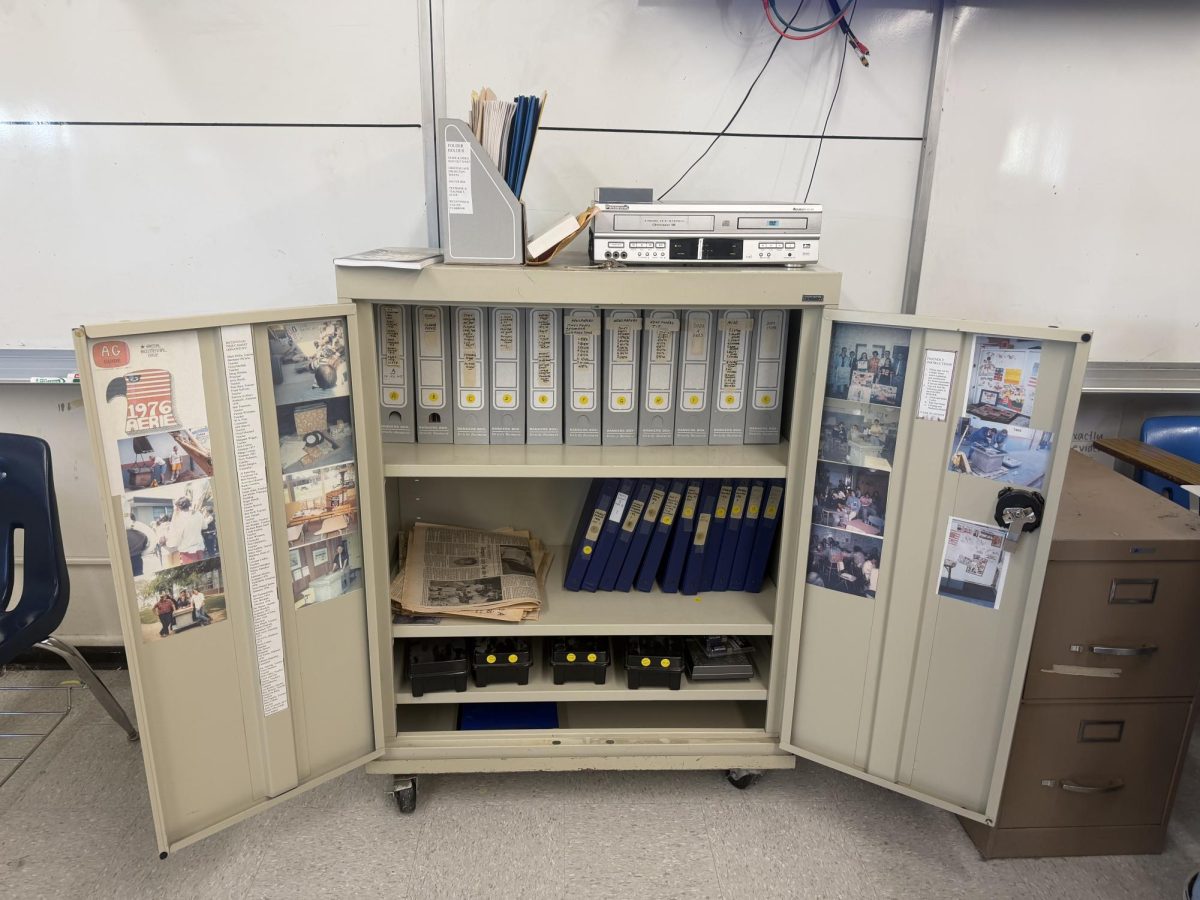
The logistical side of the program, however, remains a challenge. Hurtado explained that verifying large quantities of hours requires significant administrative oversight. To ensure the integrity of the graduation awards, the school must verify every signature, a process that often involves weeks of coordination with outside organizations.
To streamline this, the school has implemented a digital logging system.
“Students are now encouraged to upload their own logs, with staff like Mrs. LaBrado in rooms 514 and 515 available to assist with the transition to the new verification platform,” Hurtado said.
For many participants, the 20-hour minimum serves only as an entry point. By engaging in high-intensity “chunks” of service—such as 40-hour mission weeks or long-term commitments to projects like the “Tortoise and Turtle” initiative—students are using the program to bridge the gap between high school and their professional futures.
As the “Give Back 250” numbers continue to rise, it appears the student body is increasingly looking past the graduation requirement in favor of more substantial community impact.