
Art is everywhere. Every corner of the world is a form of creative expression: architecture, inventions, fashion, paintings, movies, ideas, music, and literature. It’s also clear that every form of art has a human mind behind it. New York City (NYC), “the city that never sleeps,” is known for its contribution to the global art scene, from its well-known fashion lines, some of the world’s most famous art galleries, iconic newspapers and magazine publications, and filming movies like “The Devil Wears Prada.”
It’s obvious that a movie that began focused on the horrors of working for a magazine shifted into why it is more dreadful to have no magazine at all. NYC, the “concrete jungle where dreams are made of,” at least that’s how Alicia Keys puts it (Empire State of Mind), is the center of the 2006 film “The Devil Wears Prada” and its 2026 sequel “The Devil Wears Prada 2.”
The 2006 comedy-drama movie, “The Devil Wears Prada,” was a hit in the early 2000s that sparked ideas on art; journalism, fashion, and design in NYC. The movie follows an inspiring journalist, Andi Sachs (actor name), securing a job as an assistant to the demanding and cruel editor-in-chief of Runway Magazine, Miranda Priestly (actor name). While navigating impossible demads from Priestly, Sachs adapts to the New York fashion scene and realizes, “A million girls would kill for this job.”
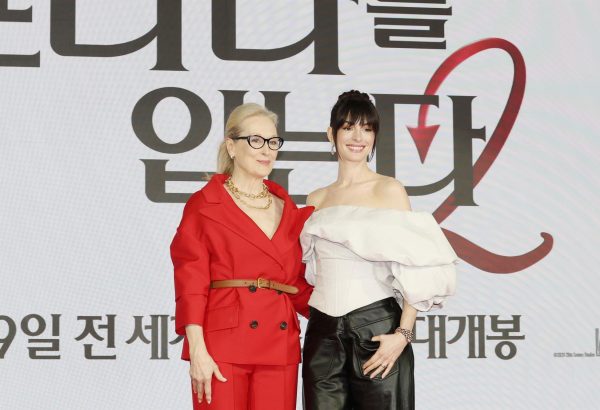
Twenty years later, Sachs returns to Priestly’s office as the new features editor after being fired from The Vanguard via text message. The 2026 movie, “The Devil Wears Prada 2,” evokes a differing perspective of NYC art, focusing on the effort to save journalism. The movie centers on preserving Runway Magazine; its owner passed away and left it to be sold to people who want to modernize the magazine with digitalization and artificial intelligence (AI) integration.
The reality comes to the stage: print media is dying as time moves forward, leaving a minority entertained by the quality of journalism. The characters’ effort to save Runway Magazine from digitalization leads billionaire Sasha Barnes (actor name) to buy the production to preserve its journalistic integrity. The storyline presented in the 2026 movie no longer focuses on Priestly’s harsh manners, although they are still prevalent, but rather the cooperation of everyone to save journalism.
“I think the movie is a very inspiring tale about the persistence of humanity against outside-driven forces, as humanity continues to stand tall and persevere against things that threaten what makes us human: creativity,” Roxie Ford (‘27) said.
This idea of saving journalism in “The Devil Wears Prada 2” displays the larger context of journalism in modern-day society. The increasing reliance on AI in journalism can substitute the authenticity of human-centered perspectives and opinions, in which journalism is defined by Vocal Media.
By definition, journalism means the professional gathering of facts, news, and information to the public via print, broadcast, or digital media (Britannica). Although AI can provide efficient gathering of facts, it can’t generate human perspectives on real-world scenarios and empathy that human journalists bring (Vocal Media). In fact, AI thrives on human intellect and human-gathered information (Fortune). In other words, AI wouldn’t exist without human intelligence, allowing an inevitable scarceness to new human-gathered discoveries and ideas.
“The Devil Wears Prada 2” presents the harsh realities many writing professionals, like journalists, face as the next “industrial revolution” of AI is expanding worldwide (ScienceDirect). It proposes that cooperation in the
cause to combat the growing role of AI is conceivable when it doesn’t serve as a tool but rather a threat to human-centered interpretations of the world.
“I think AI is a threat to types of writing because it takes away creativity and makes it easier to collect information compared to interviews characterized by person-to-person connections,” Halle McNeil (‘27) said.
It’s unavoidable that AI can be utilized as a tool to increase the quality of journalism. The amplified utilization of technology has brought 9% of major newspapers to use AI to produce news content (University of Miami News). AI can help journalists be more efficient in their tasks, such as providing captions, suggesting headlines, or transcribing audio interviews into a written story.
Perhaps it’s obvious that AI can be useful in the journalism field; however, AI replacing prior human tasks only increases the dependence on assistant technology. Maybe the realization that human-required tasks can be completed in a shorter duration by only technology and the so-called “efficiency” of AI is incomparable to imperfect human intelligence contributes to humans’ complacency. Yet, human rationality and creativity allowed humanity to prosper and grow; new inventions established, solutions created, and differing perspectives of the world to thrive.
Journalists have laid the foundation for critical thinking and humanistic perspectives throughout history. The Gilded Age ‘muckrakers’ exposed the cruelties of big corporations in the workforce, passing the Pure Food and Drug Act in 1906. AI allows humans’ jobs to become increasingly easier, yet the growing power of replacement in human authenticity outweighs the benefits of informative perfection AI may provide. New creations and ideas will inevitably become less materialized if AI is left to complete human tasks.
The solution may be adaptation. Humans have practiced adapting and adjusting to new changes throughout history; surrender isn’t the answer to a growing power. Reshaping how we use AI for the right reasons and allowing human intelligence to play its rightful role in journalism and society is crucial to avoiding an AI takeover. Manipulating its role is essential, because humans have constructed the world–technology has not. “The Devil Wears Prada 2” shows how society can adapt to and confront a growing force like AI while highlighting the value of human voice, perspective, and authenticity in the arts.
As award-winning actor, Timothee Chalamet said, “What is this Earth without art? Just a rock.”